
Advertising Spending in a Time of Reset
Written by: Joseph Adi
Global headlines over the past quarter have been dominated by geopolitical tensions, fragmented politics, energy uncertainty, and persistent inflation. For the advertising and marketing industry, this environment may initially signal slowdown. But a deeper look reveals something more important: not a collapse in demand, but a reconfiguration of how demand behaves.
According to the World Economic Forum Global Risks Report 2026, the leading global concern is now geopolitical factor, with geoeconomic confrontation (18%) and armed conflict (14%) leading the factors followed by environmental, societal, and technological issues. These issues combined is reflecting a structural shift, it is no longer primarily experienced through physical disruption, but through economic pressure: trade fragmentation, supply chain realignment, and cost volatility.
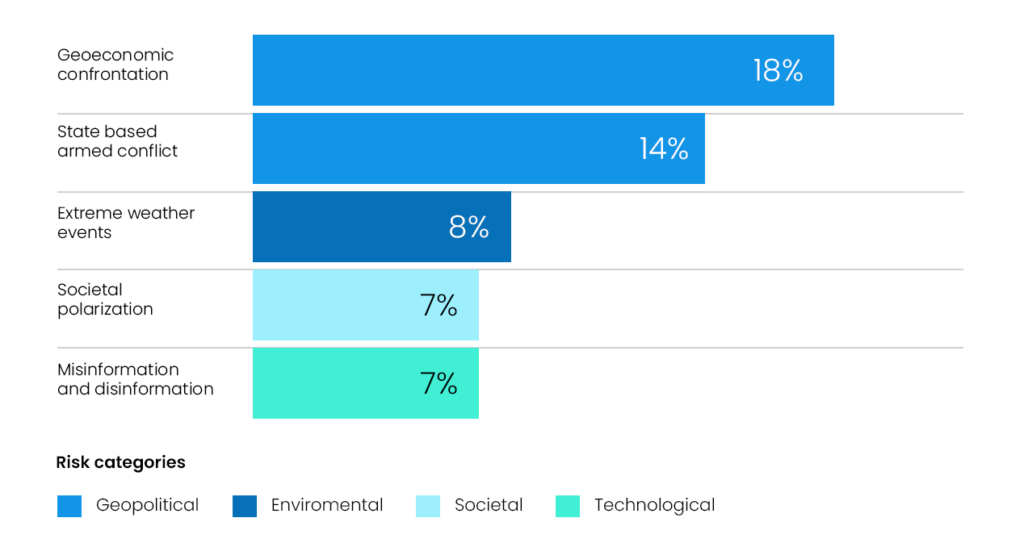
Source: World Economic Forum, Global Risks Report 2026
Indonesia: Stability as a Strategy
Indonesia illustrates how emerging economies are actively managing this pressure. With inflation rising and energy prices fluctuating due to geopolitical tensions, the government has opted to protect consumption as a growth anchor.
As inflation concerns and geopolitical tensions weigh on sentiment, consumer confidence has softened slightly, declining from 125.2 in February to 122.9 in April 2026. Yet importantly, the index remains well above the neutral 100 level, signalling that optimism has weakened, but not broken.
This resilience is driven by structural factors rather than seasonal boosts. A young population continues to anchor forward-looking sentiment, with consumers aged 20–30 maintaining the highest confidence levels across cohorts.
At the same time, government support mechanisms and steady income expectations are helping sustain purchasing power, even as households become more selective. The result is not a collapse in spending, but a recalibration, where consumers prioritize essentials while still making room for justified indulgences.
Consumers Are Not Spending Less, They Are Spending Differently
In uncertain environments, consumer behaviour rarely disappears. Instead, it reorganizes. According to 2026 regional insights, value is being redefined beyond just “low price”. This is where the “lipstick effect” comes into play. When budgets tighten, consumers don’t stop spending, they trade down to smaller indulgences that still feel worth it.
This pattern is well-supported, from increased cosmetics spending during past recessions to recent growth in beauty, snacks, personal care, and digital subscriptions. Even while cutting back, people continue to “treat themselves,” creating pockets of resilient demand across categories beyond just beauty.
What emerges is a dual-speed market: essentials remain stable, big-ticket items decline, and affordable indulgences continue to grow. In markets like Indonesia, where spending is both price-sensitive and emotionally driven, consumers justify purchases as either “I need this” or “I deserve this.” For brands, this signals not a demand crisis but a relevance test—success depends on aligning with this new mindset, where value is defined not just by price, but by meaning and emotional payoff.
The data is clear: while the global landscape remains volatile, the ASEAN, especially Indonesian consumer is not retreating, they are simply becoming more intentional. For brands in Indonesia, the current environment isn’t a signal to cut spending, but a mandate to reallocate it.
The real question now: what should marketing leaders focus on to win H2 2026?
References
AlixPartners. (2026, January 15). 2026 global consumer outlook: The structural shift in retail and consumer behavior.
Bank Indonesia. (2026, April 10). Consumer Survey March 2026: Consumer confidence remains solid.
BCA Research. (2025, December 19). 2026 Indonesia economic outlook: Inching towards higher growth.
CJDropshipping. (2026, January 25). The best-selling products online in 2026: Beauty and personal care resilience.
Trading Economics. (2026, April). Indonesia consumer confidence: March 2026 data and historical trends.
TradingView. (2026, April 1). Indonesia may need $5.9B in energy subsidies amid Iran war.
World Bank. (2026, April 8). East Asia and Pacific economic update: Middle East conflict spillovers and Indonesia growth projections
Latest Posts

Design Trends 2027: Why the Future Looks More Human
October 9, 2026

